Anxiety Therapy in Portland: Finding Your Voice in Queer and Community Spaces
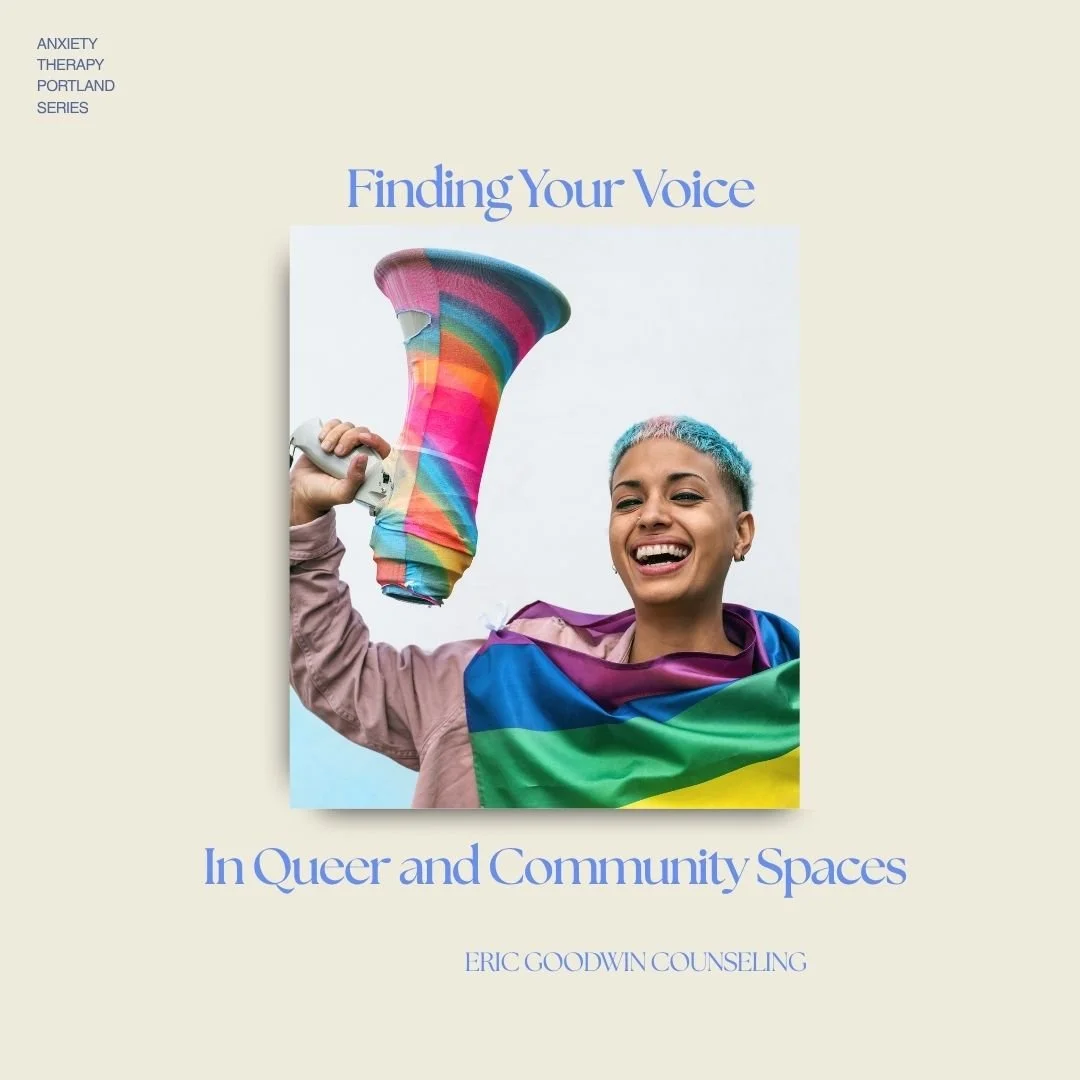
Sometimes finding your voice begins with one small change— LGBTQ+ Affirming anxiety therapy in Portland can help you reconnect with yourself and your community.
There’s a unique kind of ache that comes with wanting to belong but not knowing how and for many seeking anxiety therapy in Portland, that longing sits right alongside self-doubt. You might look around Queer or community spaces and think, “This is supposed to feel like home, right?” Yet a quiet voice inside wonders if you’re doing it wrong. If you’re too late, not Queer enough, too anxious, or somehow not quite right for the group.
If any of that sounds familiar, you’re not the only one. And it doesn’t mean something is wrong with you.
Many people coming to counseling for anxiety share a longing for connection but also notice how quickly anxiety can make them edit themselves. You may stay quiet when something bothers you, soften a boundary before you have even stated it, or leave a conversation replaying what you wish you had said. Especially for Queer clients, speaking up can carry more than ordinary social discomfort. There may be real questions about safety, rejection, or what could happen if you stop making yourself easier for other people. Therapy can help you understand those reactions without treating every fear as irrational, so you have more choice about when to speak, when to step back, and how you want to show up.
When Belonging Starts to Feel Like Performing
It’s easy to imagine that finding the right community will make belonging feel obvious. Then you walk into a Queer or community space and find yourself trying to figure out rules that everyone else seems to understand. You notice how much you’re talking, whether you’re taking up too much space, whether you seem “Queer enough,” or whether everyone else somehow got a head start on knowing how to be there. Before long, instead of simply participating, you can end up performing a version of yourself that feels easier for the room to accept.
These are real, lived experiences, not imagined problems. Many of my clients have had moments in Queer or activist spaces where they felt unsure how to show up, especially if they’re newly out, transitioning, or stepping into a new layer of identity.
You don’t have to get it right to be included. We can become curious about what you’re monitoring, what you’re afraid might happen if you stop performing, and what gets lost when belonging requires so much self-editing. Over time, that can make it easier to notice what you actually think, need, or want to say before anxiety has already made the decision for you.
When Staying Quiet Has Helped You Stay Safe
Sometimes staying quiet isn’t simply anxiety getting in the way. If experience has taught you that disagreement can change how safe a situation feels, or that being visibly Queer or trans can affect how someone treats you, it makes sense that you would pay attention before deciding what to say. There are situations where caution is not something therapy needs to help you overcome. It may be telling you something important.
What interests me is what happens when that calculation becomes so familiar that it barely feels like a decision anymore. Something lands badly, but before you have really had a chance to figure out what you think about it, you’re already smoothing things over or talking yourself out of responding. Then the interaction ends and you’re still carrying around what you wanted to say. That doesn’t necessarily mean you should have said it. I’m more interested in whether you got to make that choice.
That’s the point where I become curious about what speaking up seems to put at risk. Conflict or rejection may be part of it, or the exhaustion of anticipating that you’ll be misunderstood all over again. At the same time, there can be another pull in the opposite direction: a growing frustration with how often keeping things comfortable for everyone else has meant disappearing yourself. The work is not to decide which reaction is the “right” one. It is to understand enough about what is happening that you have more say in how you respond. Finding your voice can begin there, when fear no longer gets to make the decision before you have had a chance to.
Finding Your Voice Doesn’t Require Feeling Fearless
If your heart races before you speak or you replay the interaction for hours afterward, it can become difficult to tell the difference between I don’t want to say this and I’m afraid to say this. Past rejection, internalized shame, or experiences of being punished for standing out can make silence feel like the safest option before you’ve really had a chance to decide.
In therapy, we can pay attention to what happens when you consider speaking up, disagreeing, setting a boundary, or simply letting someone see more clearly what you think. You may notice the familiar story that you’re being difficult, too sensitive, too demanding, or somehow creating a problem by naming what is already happening.
Confidence may come with time, but I don’t think it has to be the admission price for having a voice. You can learn to stay more connected to yourself while anxiety is present, so fear becomes something you can listen to without automatically handing it the final decision.
When Your Voice Has Been Questioned, Corrected, or Misread
For a lot of Queer and trans people, speaking up is rarely just about finding the right words. There can be this extra layer of calculation running in the background: How much am I going to have to explain if I say this? Is this person actually curious, or am I about to end up defending my existence? Do I have the energy for what might come next?
I think this can become especially complicated when your identity is still changing, becoming clearer, or simply being understood differently than it was before. You may already be trying to sort out what feels true for you while also dealing with other people’s assumptions about who you are supposed to be. In that kind of situation, staying quiet can feel easier than opening the door to another conversation where you have to justify yourself.
That doesn’t mean silence is always the problem. Sometimes deciding not to explain yourself is exactly the boundary you need. What I pay attention to is whether you feel like you had a choice. There is a difference between deciding, I’m not doing this with this person, and realizing afterward that you disappeared from the conversation before you even knew what you wanted to say.
That’s part of what LGBTQ+ affirming therapy means to me. You shouldn’t have to spend your time convincing me that your identity is real or important enough to matter. We can use that time to understand what makes it easier or harder for you to stay connected to yourself when other people’s expectations start crowding out your own voice.
How Anxiety Therapy in Portland Can Help You Reclaim Your Voice
You don’t need to become louder or more confrontational to have a voice. Sometimes what changes is much less dramatic than that. You realize you don’t need to explain a boundary five different ways before it counts, or you notice that you actually disagree before automatically adjusting yourself to the room. Finding your voice can also mean recognizing when a person or a space has been asking you to work much too hard for acceptance.
I offer online anxiety therapy for adults throughout Oregon that is LGBTQ+ affirming, mindfulness-based, and that incorporates Internal Family Systems (IFS) Therapy. We can pay attention to the moments when anxiety seems to make the decision about whether you speak, stay, leave, challenge, accommodate, or ask for help. As those moments become easier to recognize, there can be more room to respond in a way that respects both your values and your safety.
Find Your Voice with Anxiety Therapy in Portland
If anxiety has been making it harder to speak up, set boundaries, or participate in the communities and relationships that matter to you, I offer free 15-minute phone consultations for adults in Portland and throughout Oregon. We can talk about what happens when you want to use your voice, what makes that difficult, and whether my approach to therapy feels like a good fit.
My approach to anxiety therapy in Portland is rooted in presence, curiosity, and respect for your full story. We’ll go at your pace, honoring what feels important to you along the way.
Call (971) 533-5590 or click here to schedule your free consultation today. You don’t have to keep quieting your voice to feel safe. Let’s find a way forward, together.
Frequently Asked Questions About Anxiety, Speaking Up, and Finding Your Voice
Why do I freeze when I want to speak up?
When speaking has been connected with conflict, rejection, embarrassment, or feeling unsafe, your reaction can happen faster than your ability to decide what you want to say. You may go blank, agree before you mean to, or think of your response twenty minutes later. Therapy can help you become more familiar with what happens in those moments so there is gradually more room between feeling threatened and automatically going silent.
Can anxiety therapy help me set boundaries or stand up for myself?
Yes. Anxiety can make a boundary feel much more dangerous than it looks from the outside, especially if you are used to monitoring other people's reactions or worrying that asserting yourself will damage a relationship. Therapy can help you understand what makes speaking up difficult and practice staying connected to your needs even when another person may not like what you have to say.
What if speaking up could actually make me less safe?
That possibility is important to consider. Therapy shouldn't assume that every fear is irrational or that the healthiest choice is always confrontation. Sometimes speaking directly makes sense; sometimes leaving, finding support, documenting what happened, or choosing not to engage is safer. The important shift is having enough perspective and understanding to make that decision rather than automatically silencing yourself because anxiety has already chosen for you.
Does finding my voice mean becoming more confrontational?
No. Finding your voice isn’t the same thing as becoming the loudest person in the room. Sometimes it means saying something you would normally swallow; other times it means recognizing that you don’t owe a particular conversation any more of your energy. What matters is becoming more able to notice what feels important to you and having enough room to choose how you want to respond.

Eric Goodwin is a Licensed Professional Counselor in Oregon and offers online therapy in Portland and throughout Oregon.
Eric works with adults navigating anxiety, harsh self-criticism, high internal pressure, and identity-related stress. His approach is warm, affirming, and focused on helping people better understand themselves while creating more room for ease, clarity, and self-trust.
He offers support for anxiety, LGBTQ+ affirming counseling, and Internal Family Systems, IFS. You can learn more about Eric here.