Anxiety Therapy in Portland That Honors Your Whole Story
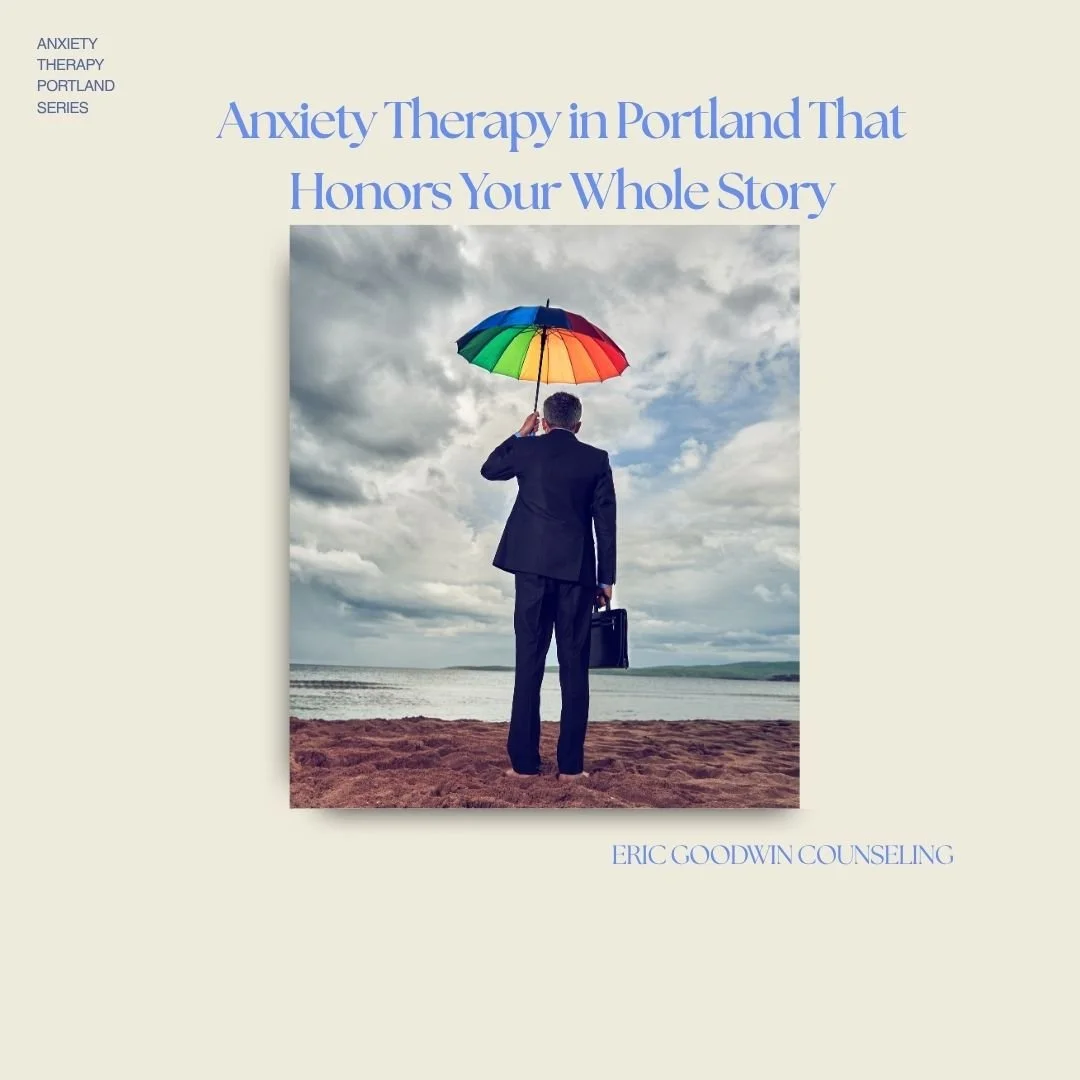
When anxiety therapy in Portland honors your full story, it creates space for relief, possibility, and a deeper connection to who you are becoming.
There’s more to anxiety than just nerves or overthinking and that’s why anxiety therapy in Portland works best when it looks beyond surface symptoms. For many people, especially within the LGBTQ+ community, anxiety is deeply connected to personal history, identity, family dynamics, and messages absorbed over time. You might be carrying stories that shaped how you see yourself, stories that still echo in your thoughts or tighten in your chest when life feels overwhelming.
Two people can have anxiety that looks very similar from the outside and have very different reasons for why it developed, what keeps setting it off, and what their mind has learned to do when something feels uncertain or unsafe. I’m interested in that context because it changes what we understand about the anxiety itself. Anxiety often makes more sense once we understand what it has been responding to.
Why Context Matters in Anxiety Therapy
Anxiety can be especially confusing when part of you knows you’re safe, capable, or prepared and another part keeps reacting as though something important could still go wrong. It’s easy to look at that mismatch and decide the anxiety is irrational. I usually find it more useful to ask what the anxiety seems to be expecting. Is it preparing you to be criticized, rejected, embarrassed, overwhelmed, or caught off guard? Once we understand what your mind and body are bracing for, the reaction often starts to make more sense.
I don’t want to turn every anxious response into an origin story. Some anxiety makes perfect sense in relation to what is happening right now. But when a reaction feels stubborn, surprisingly intense, or keeps showing up in similar situations, it can help to understand how you came to expect that particular outcome in the first place.
That expectation may have developed through relationships, messages you absorbed about yourself, experiences around identity or belonging, or simply years of learning that staying prepared helped you feel a little safer. Therapy can still help with what is happening now while also making room to understand why certain situations carry so much weight for you.
The Context Around Anxiety Isn’t Just Background
When you’ve spent a long time paying close attention to other people’s reactions, trying not to make mistakes, or staying ready for what could go wrong, anxiety can start to feel less like a sudden problem and more like a strategy that has been working overtime. Those habits usually developed for a reason, even if they are now exhausting or showing up in situations where you no longer need the same level of protection.
For those of us in the LGBTQ+ community, context also includes what is happening now. Caution about whether a space is safe or whether it is wise to disclose something about yourself is not automatically irrational anxiety. There can be real consequences attached to being misunderstood, judged, or treated differently. Therapy should be able to sort through that complexity rather than treating every fear as a distorted thought, or deciding that identity must explain everything.
We can look at both the experiences that shaped how you respond and the pressures you are dealing with now. Sometimes your concern fits what is actually happening around you; other times anxiety is preparing you for an outcome that became familiar earlier in life. Often the work is figuring out which is which, without forcing one explanation onto everything you feel.
The Hidden Cost of Holding It All Together
One reason anxiety can go unnoticed for so long is that many of the ways people manage it actually work….at least for a while. You prepare carefully, keep going when you’re overwhelmed, or become very good at noticing what other people need from you. From the outside, you may look capable and composed. The cost often shows up somewhere less visible, like in how much energy it takes to stay that way.
When those patterns have helped you avoid criticism, conflict, disappointment, or feeling caught off guard, it makes sense that they would be difficult to simply stop. This is one place I often draw from Internal Family Systems (IFS) therapy. Rather than treating the anxious or highly vigilant part of you as the problem, we can get curious about what it believes it is preventing and why working this hard has felt necessary.
That changes the conversation from “How do I get rid of this reaction?” to understanding what would help you feel less dependent on it. You may still care deeply, prepare well, or notice what is happening around you. The difference is that those qualities don’t have to be driven by the same constant pressure to stay ahead of whatever might go wrong.
Mindfulness and Self-Compassion Help You Notice the Pattern
Once we start understanding what anxiety is bracing for, mindfulness can help you catch the pattern while it is happening. You may notice your mind rehearsing a conversation, scanning someone’s reaction, or trying to solve a problem that can’t actually be solved yet. Mindfulness gives you a chance to notice what is happening before the familiar response carries you too far along with it.
Self-compassion becomes important because noticing anxiety doesn’t automatically mean you’ll respond kindly to yourself. Awareness can just as easily turn into, “Seriously? I’m doing this again?” If you’ve relied on pressure, self-criticism, or high expectations to keep yourself functioning, responding with compassion can initially feel unnatural, or even like you’re letting yourself off the hook.
I think of both practices as ways of staying with your experience long enough to understand it. They can help you recognize when an old expectation has been activated, notice what is actually happening now, and become less likely to pile shame or criticism on top of the anxiety that was already there.
What Changes When Your Anxiety Makes More Sense To You
Understanding the context around anxiety doesn’t mean you suddenly approve of every reaction or stop wanting things to change. What can shift is the way you interpret what is happening. A reaction that once seemed embarrassing, excessive, or inexplicable may start to look more understandable once you can see what it has been trying to prepare you for.
That understanding can make it easier to catch yourself in the moment. Maybe you notice that familiar tightening when someone seems disappointed with you, or the immediate urge to figure out what you did wrong. Instead of automatically following the anxiety wherever it wants to take you, you have a clearer vantage point from which to ask yourself whether the danger it is preparing for is actually here, now.
Change can then come from understanding rather than self-attack. You can take seriously the reasons a response developed without assuming you still need it to work this hard in every situation. Over time, that can make it easier to respond to what is actually happening now instead of reacting only to what your anxiety has learned to expect. If you’re trying to figure out what kind of support might fit for you, it can help to know what to look for when comparing anxiety therapists and their approaches.
Looking for Anxiety Therapy That Takes the Whole Picture Into Account?
If anxiety has become exhausting or difficult to understand, you don’t need to have already figured out why it keeps happening before you come to therapy. That can be part of the work.
We can pay attention to what anxiety seems to be preparing you for, what makes certain situations carry so much weight, and whether ways of protecting yourself that once made sense still fit what is happening in your life now. In my approach to anxiety therapy in Portland, I draw from IFS Therapy, mindfulness-based approaches and LGBTQ+-affirming therapy.
I offer online therapy for adults in Portland and throughout Oregon, typically meeting weekly. If you’d like to see whether working together might be a good fit, I offer a free 15-minute phone consultation.
Call (971) 533-5590 or click here to schedule your free consultation today.
Frequently Aasked Questions About Understanding Anxiety in Therapy
Why do I feel anxious when nothing is obviously wrong?
Sometimes the situation in front of you really is okay while your mind or body is preparing for something it has learned to expect. You may notice yourself bracing for criticism, rejection, conflict, or simply the feeling of being caught off guard. Understanding what the anxiety is anticipating can help make a reaction that seemed random or irrational feel less mysterious.
Does understanding where anxiety comes from mean therapy has to focus on the past?
No. Your history can help explain why certain situations carry so much weight without becoming the only thing therapy talks about. The point is to understand enough about how a pattern developed that you can recognize when it is being activated now and decide what actually fits the situation you are in today.
Can anxiety be protective even when it is causing problems?
Yes. An anxious response can become exhausting while still having a protective intention behind it. Staying vigilant, preparing extensively, or trying to prevent mistakes may have helped you feel safer or more in control at some point. In IFS therapy, we can become curious about why a part of you believes that response is necessary rather than treating it as something you should simply stop doing.
How do I know whether my anxiety is responding to something real or an old pattern?
Anxiety can be doing both at once. A situation may genuinely be uncertain, uncomfortable, or unsafe while an older expectation makes your reaction more intense or harder to sort through. Therapy can help you loo
k more closely at what is happening now, what your anxiety is preparing you for, and whether those two things match.
The point isn’t to prove that your fear is irrational. It’s to understand the situation well enough that anxiety doesn’t automatically make the decision for you.

Eric Goodwin is a Licensed Professional Counselor in Oregon and offers online therapy in Portland and throughout Oregon.
Eric works with adults navigating anxiety, harsh self-criticism, high internal pressure, and identity-related stress. His approach is warm, affirming, and focused on helping people better understand themselves while creating more room for ease, clarity, and self-trust.
He offers support for anxiety, LGBTQ+ affirming counseling, and Internal Family Systems, IFS. You can learn more about Eric here.