Stuck Again? Anxiety Therapy in Portland for When Fear Keeps You Paused
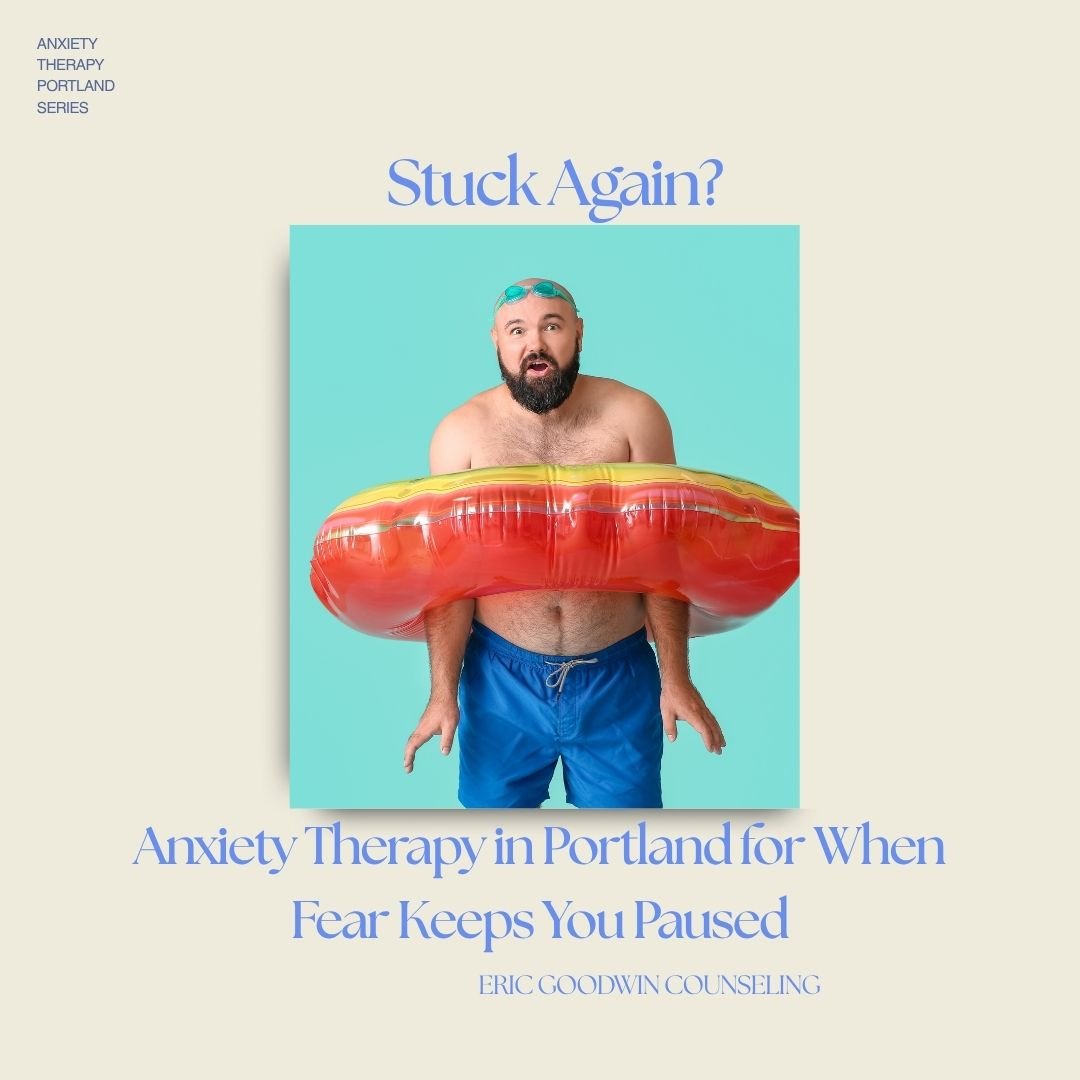
Feeling stuck? Anxiety therapy in Portland can help you find your way out of the loop and back into your own life.
Looking for anxiety therapy in Portland often starts with the realization that some part of your life has been stuck for longer than you want to admit. You keep functioning and taking care of what needs taking care of. Yet the thing you’ve been hoping would shift is still unresolved, despite wanting so badly to turn a corner.
Feeling trapped inside anxious patterns can create a frustrated kind of standstill. Your mind can stay incredibly busy while your life feels pinned in place. All that thinking takes energy, even when it doesn’t leave you feeling any closer to where you want to go.
Over time, anxiety can start shaping more than the moments when you feel obviously anxious. You get used to building your life around what feels manageable. The safer path becomes easier to recognize than the one you actually want, and your own sense of direction gets harder to hear.
This is where people often describe feeling as though they are drifting. Life keeps moving, and you keep responding to whatever it asks of you. Weeks fill up and disappear. You are there for all of it, but it can become harder to feel that you are choosing where any of it is headed.
Months pass. Nothing catastrophic may have happened, but nothing feels alive, either. What hurts is realizing how long you have been circling the same ground while time keeps passing. Once you see that, it can be very easy to turn the stuckness into a judgment about yourself.
Eventually, the distance between the life you are living and the life you want becomes harder to ignore. You can see how much energy has gone into keeping things manageable. Waiting to feel different stops feeling like enough.
You want to feel like you have some say in your own life again.
Why Staying Still Can Start to Feel Safer Than Moving Forward
Feeling stuck does not mean that nothing is happening. A surprising amount of energy can go into keeping life within a range that feels manageable.
When moving forward has come to feel dangerous in some way, staying where you are can make sense even while another part of you desperately wants change. This is one reason drift can have a freeze-like quality without looking like total shutdown. You are still living your life and handling what needs your attention, but the places that require uncertainty can begin to feel much harder to enter.
For some people, that caution has a history. Being careful may once have helped you get through an environment where reading the room mattered. LGBTQ+ clients may recognize this in the habit of paying close attention to whether it feels safe to be fully known. Over time, your mind and body can become very practiced at looking for what could go wrong before there is much room to notice what you want.
One of the difficult things about protective patterns is that they do not always update as quickly as our circumstances do. A response that helped you through something genuinely difficult can keep showing up after your life has changed. You may have more freedom now while still feeling a strong pull toward what is familiar.
Once we understand the stuckness this way, a different question becomes possible: what is the part of you that wants to stay still afraid would happen if you moved?
That is often where IFS therapy becomes helpful in my work. We do not have to argue with that part or convince it that its fear is unreasonable. We can get curious about what it learned and why it still believes its job is necessary. When that fear begins to make sense, movement does not have to come from dragging yourself past it.
How Therapy Can Help You Understand What’s Keeping You Stuck
By the time someone comes to therapy feeling stuck, they have usually spent a lot of time thinking about the problem. They may understand exactly why a change would be good for them and still feel themselves pulled back toward what is familiar. Knowing more about the pattern does not always change what happens when fear gets involved.
Therapy gives us a chance to pay attention to that moment more closely. Something may seem manageable in theory and feel very different once it becomes real. You can notice the shift from wanting movement to wanting distance, and we can stay with that long enough to understand what just happened. This can help to tell you something about what the stuckness is trying to protect.
In IFS therapy, I’m interested in the part of you that puts on the brakes. I might wonder what it expects would happen if it stopped working so hard to keep things where they are. Often there is some history behind its caution, and hearing that history can change the way you understand a pattern you may have spent years criticizing.
The stuckness becomes easier to make sense of when you can see the protective logic inside it. You can still care deeply about changing your life while also understanding why another part of you is scared of what change might bring. Those two truths do not have to cancel each other out.
That is often where movement becomes more possible. Fear may still have plenty to say, but it no longer has to speak for all of you.
When Feeling Stuck Turns Into Self-Criticism
Feeling stuck for a long time can start to affect how you see yourself. At first, you are frustrated with the pattern. After a while, the frustration can turn inward and start sounding more like a judgment about who you are.
That is often when the inner critic gets louder. It starts building a case that you are wasting time, being too afraid, or making something harder than it needs to be. The criticism can even feel useful for a while because it gives you the sense that at least someone inside is trying to get things moving.
Usually, though, it adds another layer of pressure to something that already feels difficult. Now there is the fear that has been keeping you stuck and the shame of believing you should have figured out how to overcome it by now. It becomes much harder to understand what is actually happening when so much energy is going toward arguing with yourself about whether you should be struggling at all.
This is one reason mindfulness and self-compassion can be supportive in therapy. I am not asking you to excuse a pattern that is making your life smaller or convince yourself that everything is fine. I want to make enough room around the self-criticism that we can hear what it has been drowning out. Often, the criticism is sitting on top of something more vulnerable that needs our attention far more than another demand to get it together.
For LGBTQ+ clients, some of that harshness may also have been shaped by years of paying close attention to how much of yourself felt safe to show. That kind of vigilance can also shape your sense of belonging, especially when being accepted has sometimes depended on how much of yourself you were willing to reveal. LGBTQ+ affirming therapy gives us room to take that history seriously without turning identity into the explanation for everything you struggle with.
Feeling Stuck Can Start to Feel Like “Just Who You Are”
After you have lived with the same anxious patterns for a long time, they can start to feel less like patterns and more like personality. You stop thinking, “I get stuck here,” and start thinking, “This is just who I am.”
That shift can happen quietly. You get used to expecting yourself to hesitate. The caution becomes familiar enough that it stops feeling like something you are doing and starts feeling like something you are.
Familiarity can be convincing. When a pattern has followed you for years, it is easy to assume that it says something permanent about you. That can make the stuckness feel even heavier because now the question is no longer only whether things can change. You are beginning to wonder whether you can.
Therapy can help separate those two things. I want to understand what you learned to do to protect yourself and how those adaptations became woven into the way you think about who you are. The goal is not to uncover some “real you” hidden underneath the anxiety. It is to make more room for the parts of you that have had less influence while caution has been doing so much of the talking.
As that happens, “this is just who I am” can begin to feel less like a conclusion. Fear and hesitation may still be part of your experience without having to define the limits of who you are.
Making More Room for Your Own Life
As anxiety takes up less of the available space, it becomes easier to notice what matters to you. In anxiety therapy in Portland, this is part of what I hope the work can make possible: having more access to your own sense of direction, even when fear is still present.
Mindfulness can help us catch the moment when anxiety starts pulling your attention toward what could go wrong. The inner critic may still have plenty to say, but you are not required to organize everything around its opinion.
For someone who has spent a long time adapting around anxiety, that can change the way life feels from the inside. You may start noticing places that no longer fit as well as they once did. Even the restless nights when your mind won’t turn off can feel different when every anxious thought does not have to become a problem that gets solved before morning.
As you become more able to stay with what is happening inside, fear does not have to be either obeyed or fought. You can hear what it is worried about and still decide what you want to do with that information. That is where drift begins to change: you are no longer only reacting to what feels safest. You have more room to choose where you want to go.
If Anxiety Has Been Keeping Your Life on Hold
If you recognize yourself in what we’ve been talking about here, therapy can give us a place to understand why moving forward has carried so much weight. If you’re still sorting through what kind of support would make sense for you, finding a therapist whose approach actually fits what you need can be its own part of the process.
My work with adults seeking anxiety therapy in Portland and throughout Oregon draws from IFS therapy, mindfulness & self-compassion, and LGBTQ+ affirming therapy.
You do not need to arrive knowing exactly what needs to change. We can begin with the places where you feel caught and become curious about what has made staying where you are feel necessary. From there, we can pay attention to what helps you feel more able to participate in the direction your life takes.
I offer online therapy throughout Oregon and a free 15-minute phone consultation. Call (971) 533-5590 or contact me here if you would like to talk about whether working together feels like a good fit.
Frequently Asked Questions About Feeling Stuck With Anxiety
Why do I still feel stuck when I know I want something to change?
Wanting change does not necessarily settle the fear that comes with moving toward it. You can be thoroughly tired of the pattern and still feel yourself pulled toward what is familiar once change becomes real. I don’t see that as evidence that you lack motivation. I want to understand what makes staying where you are feel important enough that some part of you keeps choosing it.
Does feeling stuck mean I’m avoiding something?
Avoidance may be part of the pattern, but calling it avoidance can end the conversation too quickly. If staying where you are lowers the anxiety, even briefly, that short-term relief helps explain why the pattern has so much staying power. Therapy gives us a chance to understand what feels risky about moving rather than turning the avoidance itself into another thing you should be doing better.
Why can I understand my anxiety so well and still keep ending up in the same place?
Insight can explain a pattern without changing what happens when you are inside it. You may know exactly where your anxiety comes from and still feel the old pull toward caution when something important is at stake. Therapy lets us pay attention to that response while it is happening and understand what keeps giving it so much influence. Knowing why you are anxious matters, but sometimes the next piece of the work is learning how to be with the fear differently when it actually arrives.
Can therapy help if I’ve lost touch with what I actually want?
Yes. When life has been organized around staying safe for a long time, it can become much easier to know what you want to avoid than what you want to move toward. Therapy gives us room to hear your own preferences again without demanding an immediate answer about what you are supposed to do with them. As that connection becomes clearer, fear can still have a place in the conversation without automatically deciding where your life goes next.

Eric Goodwin is a Licensed Professional Counselor in Oregon and offers online therapy in Portland and throughout Oregon.
Eric works with adults navigating anxiety, harsh self-criticism, high internal pressure, and identity-related stress. His approach is warm, affirming, and focused on helping people better understand themselves while creating more room for ease, clarity, and self-trust.
He offers support for anxiety, LGBTQ+ affirming counseling, and Internal Family Systems, IFS. You can learn more about Eric here.