The Top 4 Truths About Anxiety Therapy in Portland
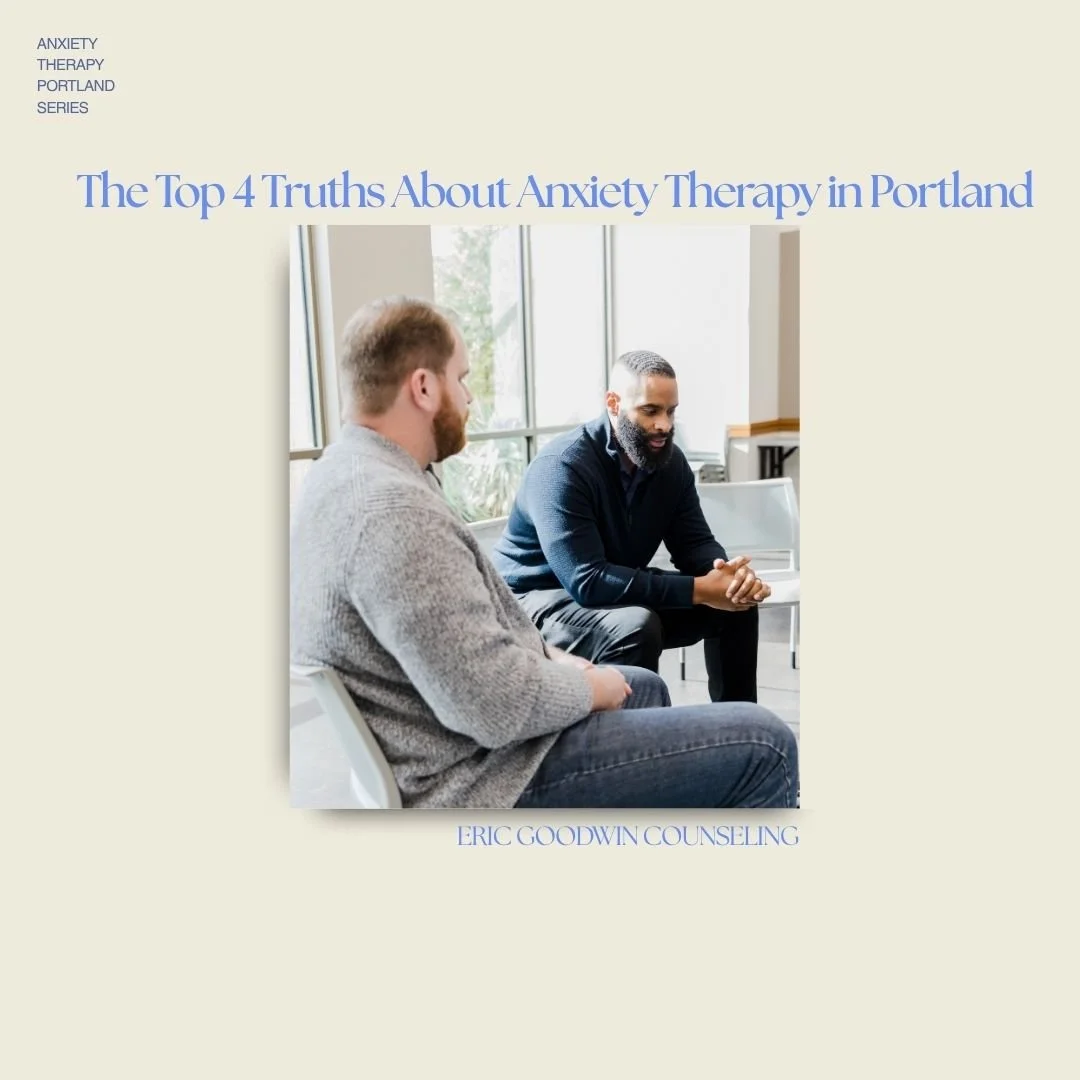
Therapy isn’t about fixing you; it’s about learning to trust yourself again. Anxiety therapy in Portland can support that growth.
Starting anxiety therapy in Portland can feel like one more thing to figure out when you’re already exhausted from overthinking. You may know that anxiety is taking up too much space in your life without having any idea what therapy is really gonna be and feel like once you get there. Are you expected to learn how to calm yourself down? Talk through everything that makes you anxious? Stop feeling anxious altogether?
That uncertainty makes it harder to know what is reasonable to expect from counseling for anxiety. The work can include symptom relief, and it also involves understanding why certain fears or patterns have such a strong hold, becoming less harsh with yourself when anxiety shows up, and having more freedom to make choices without anxiety deciding everything for you. In my work with adults seeking help with anxiety, those changes often mean just as much as whether someone feels less anxious on a particular day.
Here are four things worth knowing about what anxiety therapy can actually be like.
Truth #1: Anxiety Therapy Is About More Than Learning to Calm Down
There are times when being able to settle yourself in an anxious moment is exactly what you need. If your thoughts are racing or your body is on high alert, relief matters. I wouldn’t want therapy to become so interested in understanding anxiety that we forget how exhausting it can be to actually live with.
But counseling for anxiety is usually about more than getting better at calming yourself down. Part of the work is noticing what tends to happen before, during, and after the anxiety, and what keeps pulling you back into the same places. That gives us more to work with than simply asking, “How do I make this feeling stop?”
Sometimes what changes first isn’t the intensity of the anxiety itself. It’s that you understand what is happening sooner, feel less blindsided by it, or have a better sense of what you need when it shows up.
Truth #2: Anxiety Usually Has a Reason for Working So Hard
By the time you start therapy, you may have spent a long time treating anxiety like an unwanted problem that should have disappeared by now. When it keeps coming back anyway, it’s easy for frustration to turn into a conclusion about yourself: I’m too sensitive. I overthink everything. I should be able to handle this better.
One of the things I appreciate about Internal Family Systems (IFS) therapy is that it gives us another way to understand what is happening. An anxious part of you can be exhausting and still be trying very hard to protect you. The part that keeps reviewing a conversation may be trying to prevent rejection or embarrassment. The part that wants every decision settled before you make it may have learned that uncertainty feels dangerous. Even the part that imagines what could go wrong before you’ve gotten out of bed may believe that being prepared is the safest way to get through the day.
Understanding anxiety this way doesn’t require us to pretend that all of that worrying is helpful. Sometimes the strategies that were meant to protect you start taking up enormous amounts of time and energy, or keep you from doing things that matter to you. But it gives us somewhere more useful to begin than assuming your mind is malfunctioning and needs to be argued into behaving differently.
As we understand more about what anxiety is trying to prevent, there is often less need to fight with it quite so aggressively. You can begin noticing when an old protective response has taken over, what it is afraid might happen, and whether you still need to organize your life around that fear in the same way.
Truth #3: LGBTQ+ Affirming Anxiety Therapy Needs to Understand Both Identity and Context
If you identify anywhere within the LGBTQ+ community, anxiety may not make much sense when it’s separated from questions of safety, belonging, visibility, or how other people are reading you. Sometimes the anxiety is connected directly to identity. Other times identity is simply part of the context in which everything else is happening.
Making both connections and distinctions between identity and context becomes essential in anxiety therapy in Portland for people in the Queer community. You don’t want to spend half the session figuring out how much background your therapist needs before you can talk about the thing that actually brought you in. There can be a surprising amount of mental work involved in deciding whether someone will understand a relationship, a family dynamic, an experience of being misgendered, or the reason a particular social situation carries more weight than it appears to from the outside.
For me, LGBTQ+ affirming therapy means that we can pay attention to those realities without making your identity responsible for explaining every problem in your life. Anxiety may be connected with family, work, perfectionism, relationships, shame, uncertainty, earlier experiences, or all kinds of things that have nothing to do with being queer or trans. Good therapy should be able to hold that complexity without requiring you to choose between having your identity understood and being seen as a whole person.
When less energy goes into monitoring whether the therapist is going to get it, there is more room to talk honestly about what is actually happening.
Truth #4: Progress in Anxiety Therapy Often Shows Up Between Sessions
Therapy can be a little strange this way because change does not always become clear while you’re sitting in session. You may leave an appointment feeling thoughtful, relieved, irritated, uncertain, or basically the same as when you logged on. None of those reactions tells us very much by itself about whether the work is helping.
I tend to become more interested in what happens when life gives you another version of something that has always been difficult. A decision still brings up doubt, but you don’t lose the rest of the evening trying to make absolutely certain you chose correctly. Someone is disappointed with you and the discomfort is real, yet you’re less compelled to immediately fix their feelings. Anxiety shows up before an unfamiliar situation, but instead of taking that as evidence that you shouldn’t go, you become curious about what the fear is asking you to avoid.
Sometimes progress is subtle enough that you recognize it only after the fact. You realize you recovered from something more quickly, trusted your own read of a situation, or treated yourself with less hostility when things didn’t go the way you hoped. Anxiety may still be part of the experience. What begins to change is how much of your life has to reorganize itself around it.
That is often what I’m paying attention to in anxiety therapy: whether the work we’re doing together is beginning to affect the moments when no therapist is there to help you sort through what happens next.
If You’re Searching for Anxiety Therapy in Portland
If some of what I’ve described here sounds familiar, you don’t need to know exactly what needs to change or what kind of therapy is going to help before reaching out. We can start with what anxiety has been like for you, where it seems to have the strongest hold, and what you’re hoping might feel different.
I offer online anxiety therapy in Portland and throughout Oregon, drawing from IFS therapy, mindfulness and self-compassion, and LGBTQ+ affirming therapy. I offer a free 15-minute phone consultation so we can talk a little about what brings you to therapy and whether working together seems like a good fit.
You can call (971) 533-5590 or click here to schedule a consultation.
Frequently Asked Questions About What to Expect From Anxiety Therapy
What if I’ve already tried coping skills and I’m still anxious?
That doesn’t mean you’ve failed at managing anxiety. Coping practices can be genuinely helpful, especially when anxiety is intense, but sometimes the same fears keep returning because there is more going on than the immediate anxious feeling. Therapy gives us time to understand what tends to set the pattern in motion, what the anxiety may be trying to prevent, and what happens when the strategies you usually rely on stop working as well as you need them to.
Do I need to know why I’m anxious before starting therapy?
No. Sometimes people arrive with a pretty clear sense of where their anxiety comes from, and sometimes they only know that they are worrying more than they want to, avoiding things, second-guessing themselves, or feeling constantly on edge. You don’t need to solve the anxiety before bringing it into therapy. Part of the work can be figuring out together what seems to make it louder and what else may be connected to it.
How long should I give anxiety therapy before deciding whether it’s helping?
There isn’t one point where therapy is supposed to suddenly prove itself. I’d pay attention to whether you’re beginning to understand your anxiety differently, whether something useful is happening in the relationship with your therapist, and whether small changes are beginning to show up outside sessions. It is also reasonable to talk directly with your therapist if you’re unsure about the work. Therapy shouldn’t require you to quietly wonder for months whether anything is happening.
What if I still feel anxious even though therapy is helping?
That can happen. Feeling anxiety does not automatically mean therapy is failing. You may notice that anxiety passes more quickly, has less influence over a decision, or doesn’t lead to the same amount of avoidance or self-criticism afterward. For many people, therapy becomes useful not because anxiety disappears completely, but because it becomes less able to organize the rest of their life.

Eric Goodwin is a Licensed Professional Counselor in Oregon and offers online therapy in Portland and throughout Oregon.
Eric works with adults navigating anxiety, harsh self-criticism, high internal pressure, and identity-related stress. His approach is warm, affirming, and focused on helping people better understand themselves while creating more room for ease, clarity, and self-trust.
He offers support for anxiety, LGBTQ+ affirming counseling, and Internal Family Systems, IFS. You can learn more about Eric here.