Starting Anxiety Therapy in Portland: A Guide for When You’re Overwhelmed
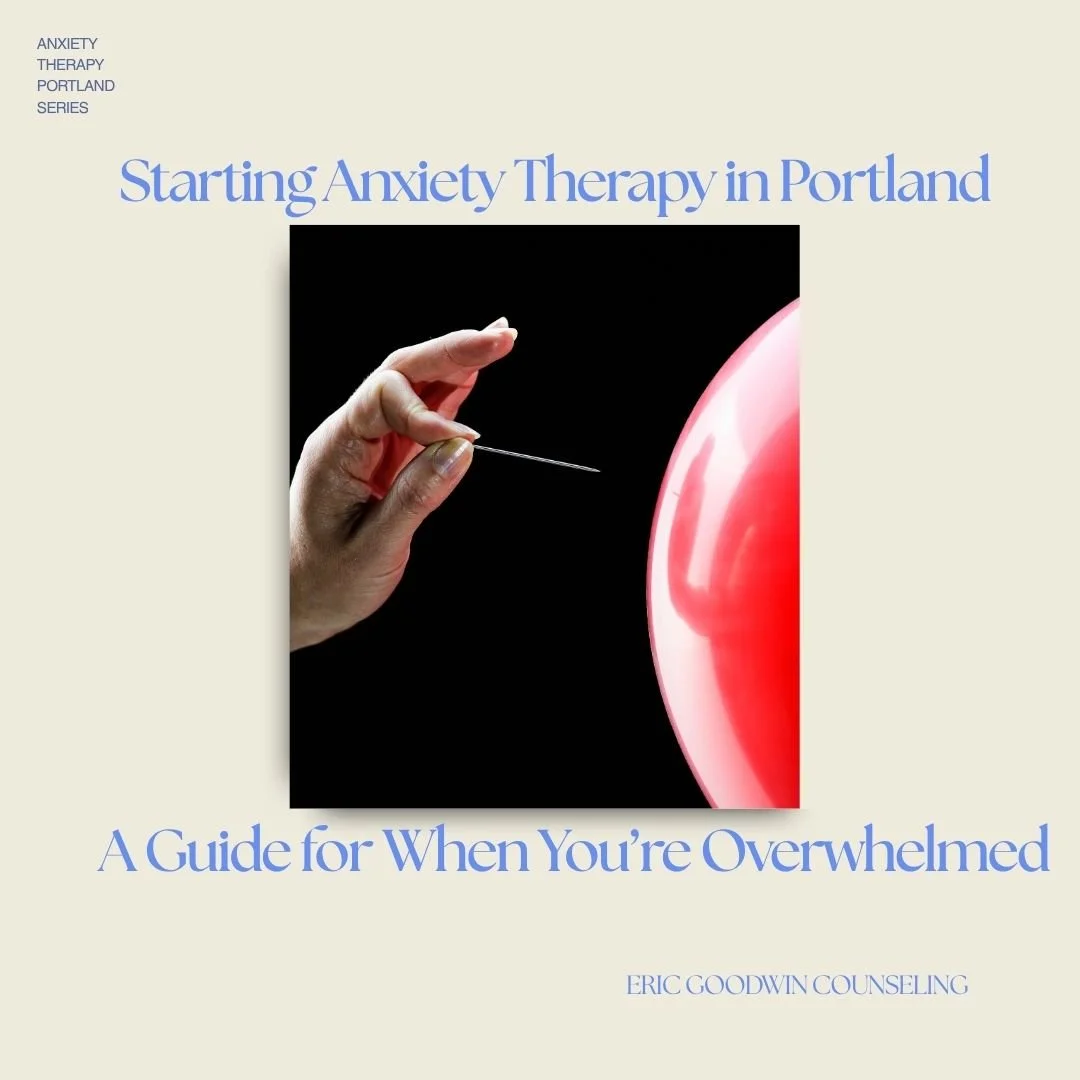
When everything feels like it might pop, anxiety therapy in Portland can help ease the pressure and guide you forward with care.
When overwhelm is already weighing you down, even the idea of starting anxiety therapy in Portland can feel like one more thing you don’t have the energy to manage. You might know you need support but scrolling through websites, sorting out payment options, or drafting that first message to a therapist can feel like a mountain to climb.
If that’s where you are right now, the difficulty getting started may actually be part of what anxiety is doing. When your mind is already trying to anticipate what could go wrong, make the right decision, and avoid one more thing you might regret, choosing a therapist can become another problem to solve perfectly. Overwhelm isn’t always what therapy “fixes” after you begin; sometimes it is part of what makes beginning feel so hard in the first place.
You don’t need to sort all of that out before reaching out.
Let’s break it down.
When Even Reaching Out Feels Like Too Much
Anxiety has a way of making a fairly simple task feel much bigger once you get close to actually doing it. You can know that you want help and still find yourself staring at a therapist’s contact page wondering what you’re supposed to say. How much do you explain? Do you need to describe what’s been going on? What if it sounds dramatic? What if you don’t explain it well enough?
Sometimes the pressure to get that first message right becomes enough to keep you from sending one at all.
This is part of how anxiety works; it floods your system and then tells you you’re failing for being flooded. You may decide you’ll reach out when you feel calmer, when you can think more clearly, or when you’ve figured out how to describe what’s happening. Sometimes you do have more energy later. Sometimes three weeks go by and the browser tab is still sitting there.
If that sounds familiar, I want to make the first step smaller.
Your first message does not need to tell your whole story. It does not need to explain why you’re anxious, how long it has been happening, what you think caused it, or what kind of therapy you need. You can simply say that you’re looking for help with anxiety and would like to schedule a consultation. That is enough to begin.
And if you do schedule a consultation, you don’t suddenly become responsible for carrying that conversation either. You can tell me that you’ve been overwhelmed and aren’t sure where to start. You can lose your train of thought. You can get nervous and forget something you meant to ask. Part of my job is to help us find our way into the conversation together rather than waiting for you to arrive with a clear presentation of what is wrong.
Starting counseling for anxiety doesn’t require you to be calm, clear, or confident. In fact, the part of you that is unsure whether you should be doing this, worried that you’ll say the wrong thing, or tempted to close the tab and deal with it another day may be part of what we eventually become curious about together.
For now, you only have to get through the beginning.
What Happens After You Reach Out for Anxiety Therapy in Portland?
After you reach out to a therapist, the next step is often a brief consultation. This usually isn’t a therapy session, and you don’t need to fit your whole story into fifteen or twenty minutes. It’s a chance to say a little about what has been bringing you to therapy, ask questions, and get a feel for whether continuing the conversation seems worthwhile.
You’re also allowed to be nervous during that conversation. If your mind goes blank when someone asks what has been going on, you can say that. If the best explanation you have is, “I’ve just been really overwhelmed lately and I don’t know where to start,” that is enough to begin. You don’t have to translate your experience into therapy language before a therapist can understand you.
If you decide to move forward, the first session gives you more time to start making sense of what anxiety has been like for you: what has been taking up the most energy, what seems to make things harder, what you have already tried, and what you would like help with. None of that has to come out in a neat order. The first hour is not a test of how well you can explain yourself.
Therapy goals can be much less formal than people sometimes imagine.. Sometimes people know exactly what they want to change. Other times they know they are exhausted from overthinking, tired of being so hard on themselves, or frustrated that they understand their anxiety intellectually and still feel caught in it. Those are all places therapy can begin.
In my own practice, I offer a free 15-minute phone consultation before we begin. If we decide to work together, sessions are online for adults in Portland and throughout Oregon. I often draw from IFS therapy, mindful self-compassion, and a LGBTQ+ affirming approach, but you do not need to understand those approaches in advance. Part of my job is to explain what I’m doing as we go, pay attention to how it is landing for you, and help us understand what anxiety is responding to without expecting you to have already figured that out on your own.
You don’t have to know how therapy is supposed to work before you start therapy. We can figure out the process together.
What If Therapy Feels More Vulnerable Than You Expected?
Sometimes the fear isn’t about making the appointment. It’s about what might happen once you’re actually there.
You may worry that you’ll start crying and won’t be able to stop, that your mind will suddenly go blank, or that something you’ve kept reasonably contained all week will feel much closer once another person is sitting there paying attention to it. For someone who is used to holding things together, that loss of composure can feel especially uncomfortable. You may even find yourself monitoring how you’re coming across to the therapist while you’re trying to talk about why you’re anxious in the first place.
None of that means the session is going badly. Crying doesn’t require an apology or an explanation. Going quiet can tell us something too. And if you notice yourself trying to give the “right” answer, make your story understandable, or reassure the therapist that you’re actually doing okay, that can become part of what we pay attention to rather than another thing you have to correct.
There is another kind of worry that I don’t want to dismiss as anxiety, though: the fear that the person sitting across from you may not really understand your experience.
If you’ve had therapy before and felt minimized, misunderstood, or pushed toward an explanation that didn’t fit, hesitation about trying again makes sense. The same is true if you’ve spent a lot of time having to decide how much of yourself is safe to reveal. For LGBTQ+ clients in particular, walking into a supposedly affirming space does not automatically erase previous experiences of being judged, misread, or expected to educate someone about your identity.
A therapist also isn’t going to understand everything about you perfectly from the beginning. I think what matters is whether there is room for you to say, “That’s not quite what I meant,” or “I don’t think that fits.” Being understood in therapy isn’t only about finding someone who gets everything right on the first try. It also depends on what happens when they don’t.
In my own work, I don’t expect trust to arrive simply because you made an appointment with me. I’m interested in letting it develop from what actually happens between us: whether you feel listened to, whether I stay curious when something is more complicated than I expected, and whether you can gradually bring more of yourself into the room without having to manage my response to it.
What Happens When Anxiety Shows Up During Therapy?
Anxiety doesn’t necessarily disappear because you made it into the session. You may be talking about something that happened at work and suddenly notice that your chest has tightened. Your thoughts speed up while you’re trying to explain a relationship. You hear yourself saying, “I know this probably doesn’t make sense,” before you’ve even finished telling me what happened. Or a part of you may simply want to move away from the subject altogether.
Those moments don’t have to interrupt the therapy. They can give us something useful to pay attention to.
Sometimes I’ll invite us to slow down and notice what is happening before we keep following the story. Not because you need to make the anxiety go away, but because it can be difficult to understand something while you’re racing alongside it. We might notice what is happening in your body, what thoughts appeared, or what suddenly began to feel threatening about the conversation.
This is one place where IFS therapy and mindfulness can become very practical. Instead of immediately arguing with an anxious reaction or assuming it is irrational, we can become curious about it. What is this part of you worried will happen? Why does getting this right feel so important? What does it believe it is helping you avoid? We don’t have to force an answer. Sometimes simply noticing that anxiety is trying very hard to protect you changes the way you relate to it.
Self-compassion matters here too, especially when anxiety is quickly followed by embarrassment or frustration with yourself. I pay attention to that second reaction because being anxious is hard enough without also having to spend the session judging yourself for being anxious in front of your therapist.
Some sessions will feel settling. Others may leave you thinking about something we touched on after the call ends. You don’t have to measure whether therapy is “working” by how calm you feel when the hour is over. What I’m more interested in is whether, over time, you can understand what is happening inside with a little less fear of it and a little more trust in your ability to stay with yourself when anxiety shows up.
What If You’re Starting Therapy Again?
Starting therapy again can bring its own kind of overwhelm. Sometimes you know more about the process than you did the first time, but that doesn’t necessarily make reaching out easier. You may also be carrying an extra question now: Why am I back here? I thought I already worked on this.
I pay attention to that question because it can wake up an inner critic that turns needing support again into evidence that something didn’t work or that you should be handling life better by now. Anxiety and self-criticism are particularly good at turning an ordinary change in circumstances into a verdict on your progress. You were doing better. You understood where some of these patterns came from. Maybe you even ended therapy feeling ready to move forward. Then life changed, an old fear became louder, or something you thought you had settled showed up in a different form.
That doesn’t necessarily mean you are back at the beginning.
You also get to bring what you learned from previous therapy with you. You may already know that you need more time before you trust someone, that a very structured approach leaves you feeling pressured, or that you appreciate a therapist who will slow you down when you start explaining everything intellectually. You may know what helped before and what you never quite got to. All of that can make starting again different from starting for the first time.
And sometimes the hesitation is connected to a previous experience that genuinely wasn’t helpful. You don’t have to convince yourself that it was better than it was in order to try therapy again. A new therapist should be able to hear what didn’t work for you without treating that as resistance or asking you to trust the process before you have a reason to.
If part of you is frustrated that you need support again, we can make room for that too. You don’t have to arrive feeling grateful for therapy, optimistic about change, or certain that this time will be different. Starting again can begin with exactly as much confidence (or skepticism) as you actually have.
If Reaching Out Still Feels Like Too Much, Make the First Step Smaller
By this point, you may understand what starting therapy can look like and still feel yourself hesitating when it comes time to actually contact someone. Knowing that the process is manageable and feeling ready to begin it are not always the same thing.
If that’s where you are, try making the task as small as it actually needs to be. You don’t need to “find a therapist” today. You don’t need to decide how long you’ll be in therapy or whether this is definitely the right person. For now, the task can simply be sending one message.
It can be this simple: “Hi, I’m looking for help with anxiety and I’m wondering if you’re accepting new clients. I’d like to schedule a consultation.”
That message does not need a backstory attached to it. You can add more if you want to, of course, but you are not responsible for anticipating every question a therapist might have. They can ask for whatever additional information they need.
And if even pressing send feels like a lot, you can make the step smaller again. Write the message and save it. Put the therapist’s contact page somewhere you can find it tomorrow. Ask someone you trust to sit with you while you send it. There isn’t a prize for making the beginning harder than it needs to be.
Once you send the message, you can stop. You don’t need to immediately solve the rest of therapy while you wait for a response. The next decision can happen when there is actually a next decision to make.
If You’re Ready to Take the Next Step
If reading this has helped starting therapy feel a little more manageable, the next step can be a free 15-minute phone consultation. You don’t need to prepare anything formal or know exactly what you want to work on before we talk.
I provide online anxiety therapy in Portland and throughout Oregon. My work is especially focused on anxiety that becomes tangled up with overthinking, self-criticism, perfectionism, identity-related stress, and the pressure to keep functioning even when you’re exhausted underneath it. I also specialize in IFS Therapy,LGBTQ Affirming Therapy and mindfulness and self-compassion.
During the consultation, we can talk briefly about what has been happening, what you’re hoping therapy might help with, and whether working together seems like a good fit. If it does, we can talk about scheduling a first session. If it doesn’t, you are still allowed to leave the conversation with a little more information about what you’re looking for.
You can call (971) 533-5590 or use the contact form to schedule a consultation.
Frequently Asked Questions About Starting Anxiety Therapy in Portland
What if I change my mind after reaching out to a therapist?
Reaching out does not lock you into therapy. You can have a consultation and decide that the fit doesn’t feel right, realize that you need more time, or simply decide not to schedule a first session. If anxiety tends to make decisions feel permanent, it can help to remember that contacting someone is only one step. You can make the next decision when you actually have more information.
Can I bring notes to a therapy consultation or first session?
Absolutely. Some people find it much easier to write down a few things beforehand, especially if anxiety makes their mind go blank once the conversation begins. You can bring questions, a few examples of what has been difficult lately, or even something you wrote when you were feeling more overwhelmed. The notes are there to help you, though. You do not have to turn preparing for therapy into homework.
What if I reach out to a therapist and don’t hear back?
Unfortunately, therapists sometimes have full caseloads, delayed responses, or inquiries that get missed. If you have not heard back after several business days, it is reasonable to follow up once or contact someone else. A therapist not responding is frustrating, especially after you worked up the energy to reach out, but it does not mean you said something wrong or that you need to write a better message next time.
What do I need for online anxiety therapy in Oregon?
For online therapy, you will need a reasonably reliable internet connection and a private enough space that you can speak comfortably. You also need to be physically located in Oregon at the time of the session because that is where I am licensed to provide therapy. You do not need a special setup beyond a phone, tablet, or computer that allows us to meet by video.

Eric Goodwin is a Licensed Professional Counselor in Oregon and offers online therapy in Portland and throughout Oregon.
Eric works with adults navigating anxiety, harsh self-criticism, high internal pressure, and identity-related stress. His approach is warm, affirming, and focused on helping people better understand themselves while creating more room for ease, clarity, and self-trust.
He offers support for anxiety, LGBTQ+ affirming counseling, and Internal Family Systems, IFS. You can learn more about Eric here.